
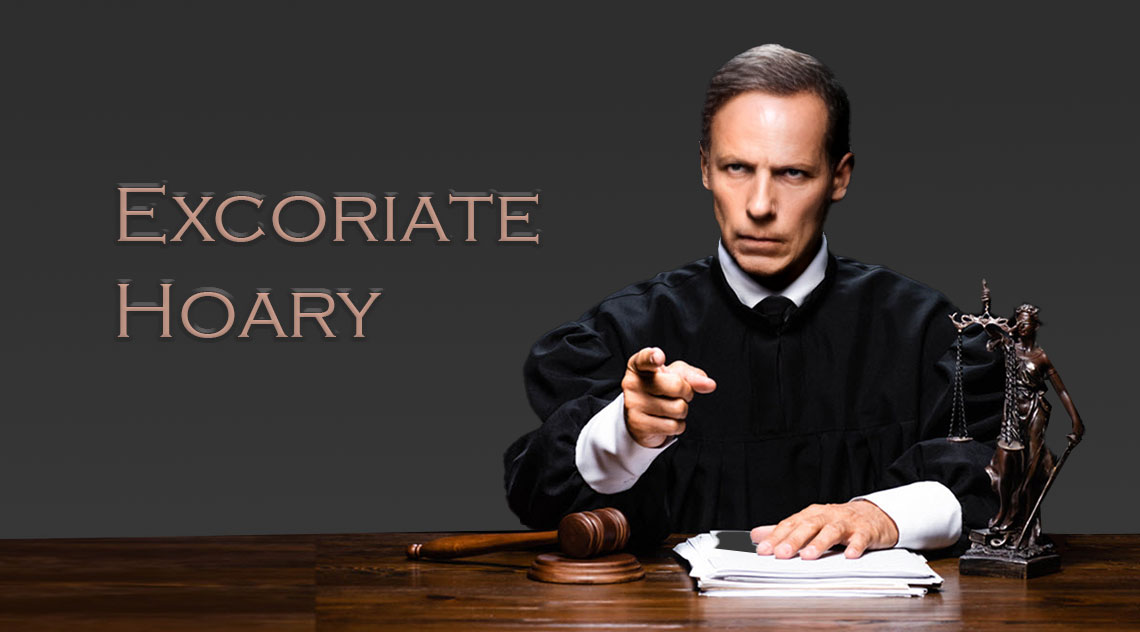
Excoriate is not a word one would use lightly. A more common term would be to chastise, scold, criticize, or condemn. In the long line of words to criticize someone or something, excoriate should be last.
Excoriate means to criticize or attack in the extreme. If you said, “George wrote an article for the paper that received excoriating reviews,” it would indicate that the reviews were so negative that they caused harm.
Like so many of our words, excoriate originates from Latin. Excoriate means stripping away the hide or skin of someone or something. Since we do not go to those extremes today, the word has taken on the meaning of extreme or severe criticism.
“The political candidates became so enraged that they began to excoriate each other.”
“The members of the House Ethics Committee excoriated the college presidents for their poor response to the Israel protests.”
“The defendant began to act so defiant that the judge excoriated his behavior and cleared the courtroom.”

Hoary often refers to something old, dull, or stale. If we refer to a story or reference someone made that was hoary, we would be suggesting that it was out of date and not funny. When we refer to a person as being hoary, it means that they are old, grey-haired, or out of step with modern trends.
“We always dreaded the Thanksgiving dinner where Uncle George would tell these hoary stories from his childhood.”
Hoary is an adjective that, when paired with a pronoun, usually refers to an older person. When paired with a noun, it means old or out of step. It can be a noun in the form of hoariness, indicating someone or something old. Hoary originates in the sixteenth century and shares its meaning with hoar, meaning crumbly.
“There was a hoary house on our street that the children were always convinced was haunted.”
“When saying his prayers, the monk always bowed his hoary head.”
“The hoary dog always slept near the fire to stay warm.”
Using these in a sentence is not difficult but requires little thought.
“The judge excoriated the lawyer’s hoary argument, pointing out that it was outdated and lacked foundation.”
“The historian excoriated the hoary myths that had long been accepted as fact.”
“The politician was excoriated for her hoary rhetoric and criticized by the press for being out of touch with critical issues.”