
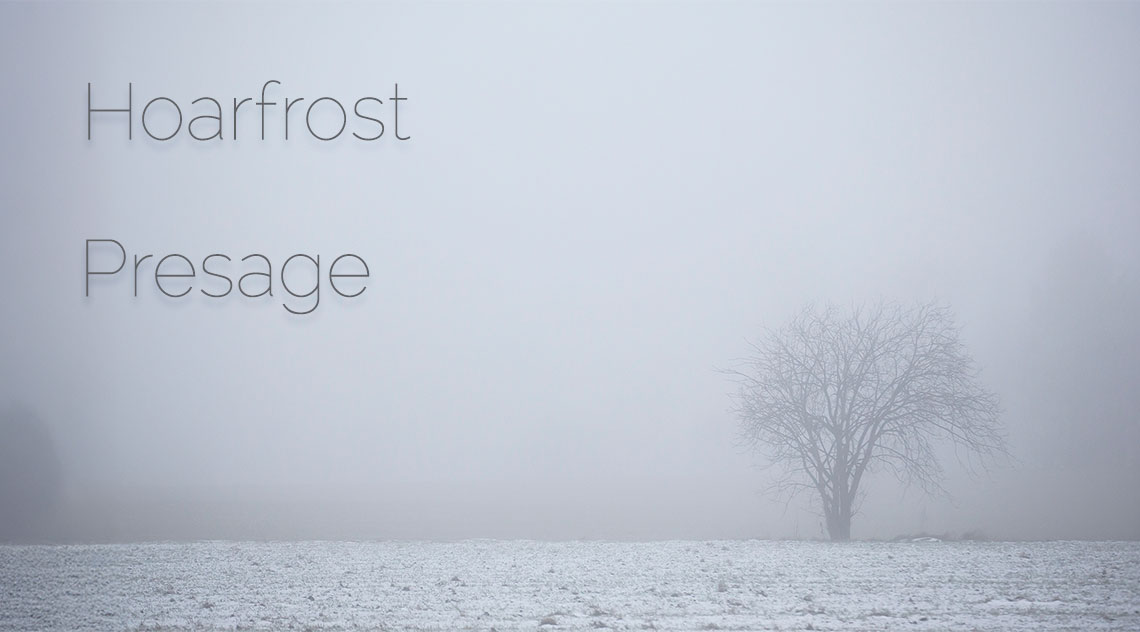
Hoarfrost is an unusual form of frost that appears only when there are extremely cold temperatures and the right moisture in the air. It forms when the moisture in the air skips the droplet stage and forms directly on objects.
Unlike just ordinary frost, hoarfrost “grows” or forms ice crystals where it clings to objects like tree limbs. These ice crystals, also called ice needles, can have a fuzzy appearance, like a beard.
“When Jane came out to go to work, she learned that her windshield was covered in hoarfrost.”
“The field behind our barn was covered in hoarfrost from the extreme cold that passed through last night.”
“Our trees took on an ethereal appearance as they were covered in a thick layer of hoarfrost.”

Presage is a verb that refers to the feeling or forethought that comes with thinking about the future. For me, presage also comes with the weight of negative events coming your way. But correctly used, it might be considered an omen or vision, neither good nor bad.
“Sally had this nagging presage that can only come from an unplanned doctor’s appointment.”
“We saw a flock of robins and took it as a welcomed presage of Spring.”
“The team’s poor performance in the first half was a presage of their loss.”
Combining these two words into a single sentence might initially seem complicated, but it was not especially hard. Hoarfrost, a noun, is easily combined with presage, a verb. The sentences roll out once you realize that the word presage is not hostile or foreboding.
“The hoarfrost coating the trees seemed to presage the arrival of an especially mild winter.”
“The light hoarfrost on the car window seemed to presage the dawn of an eerily cold and quiet morning.”
“A fuzzy hoarfrost on my windshield this morning presaged a difficult commute to the office.”