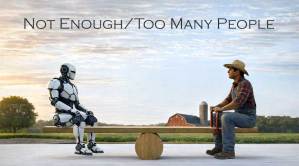

As Christians, we are taught to “Turn the other cheek” when confronted. For many Christians, this explains their silence in the face of clear persecution in modern America and around the world. In America, the left’s aggression in its attempt to wipe out faith in any form often manifests as violence, knowing the response will be tepid at best from Christians. As a result, Christians frequently become the ready-made target for people and institutions motivated by evil intentions.
Matthew’s Admonition
In Matthew’s account of Jesus’ teachings, he recounts his words to clarify the difference from the Old Testament “an Eye for an Eye” philosophy. Jesus draws a clear and strong contrast between vengeance and restraint.
38 “You have heard that it was said, ‘Eye for eye, and tooth for tooth.’ 39 But I tell you, do not resist an evil person. If anyone slaps you on the right cheek, turn to them the other cheek also.”
Matthew 5:38-39 New International Version
Here, Jesus calls for dignity and moral strength in the face of aggression. These two verses present a fundamental paradox for many Christians (and for me) when considering the open hostility toward Christians from the American left and, globally, through many channels.
We are called to avoid revenge and to act with compassion when defending the faith, but not to be victims when the choice is between survival and extinction. We are called never to let evil go unchallenged, and we know that real evil in this world must be confronted.
We know about the worldwide persecution of Christians today as a side effect of broader and more accessible communications. Today’s persecution is very likely underreported because of media bias, but it is impossible to prove. We know that Christian protests are typically peaceful; anti-Christian protests are anything but calm. We only need to look at how abortion and anti-abortion protests are conducted in America to see the contrast.
Modern Day Persecution and Martyrdom
When we read about martyrdom, what comes to mind are the apostles and early Christians who were physically persecuted, especially by pagan empires such as Rome. Today, there is real physical persecution, like that in ancient times, and what can be described as psychological persecution. Both are forms of oppression and torment, but the physical also has a mental component.
There are clear signs of repression and bias in atheist countries like China and North Korea. This pattern also extends to many countries where the dominant religion is Muslim. By some estimates, Christians face dangerous repression in countries such as Somalia, Yemen, Libya, Sudan, Nigeria, Pakistan, Iran, and Afghanistan.
According to the 2025 World Watch List, as many as 380 million Christians are experiencing high levels of persecution or repression. In 2025 alone, their research found that 4,476 Christians were murdered, 4,744 were imprisoned, and 7,679 churches were attacked. In the United States, where religious tolerance is a hallmark of our Republic, this level of violence is unknown.
Fortunately for the Christian faith, we know that in such areas of persecution, Christianity is most often driven “underground” rather than eliminated. There is a “stealth” nature to Christianity that keeps it alive when repression rises. This was true in ancient Rome and remains true today in predominantly Muslim or atheist countries.
In areas where physical persecution occurs, it can take the form of surveillance, arrest for converting from Islam, denial of resources such as food or medical care, job loss, or ostracism. In these areas, you must be a committed Christian, knowing that real martyrdom is possible. These Christians can face kidnapping, murder, sexual violence, and physical attacks. Churches face bombings and destruction by other means, such as fire.
These Christians are as much martyrs as early Christians and truly keep the faith alive. They serve as examples for those of us living under more tolerant, less violent persecution. They are worthy of our support in many ways.
Psychological Persecution
In the West, in countries with a predominantly Christian population, persecution takes on a different form. In the United States, religious freedom is guaranteed by the Constitution. But these federal guarantees are constantly challenged at the local and personal levels, making Christianity an easy target in many places. Americans do not often face the physical threats as in other countries, but they do face threats.
When atheists or agnostics hold local government positions, tolerance for Christian intolerance increases. Acts of prejudice are often treated as regional rather than state or federal issues unless they escalate into constitutional conflicts. Even then, the cost of defending or pursuing one’s rights in court dissuades most people from asserting them. Being Christian and standing up for one’s rights can financially destroy you. Non-Christians know they can kill you with a thousand legal, psychological, and financial cuts.
Violations of religious freedoms in America most often take subtle, silent forms, including workplace discrimination, media stereotyping, prejudice in educational institutions, and societal ostracism. Whereas antisemitism is usually overt, anti-Christian behavior has become more covert. It is often cloaked in social issues such as abortion, gay rights, Islamophobia, or xenophobia.
The silent, persistent pushback against and ostracization of Christianity in America has a rusting effect on our social fabric and moral compass. We go to church less often, fail to bless our food in public, and choose professional sports over church attendance. We spend the weekend taking our children to sporting events rather than attending church. If you value religious association and socialization over secular activities, you are the outsider, the problem.
Resistance and Preservation, not Revenge
If there is a ray of hope today, it lies in our perception of government interference in religion. Recent decades of government actions favoring secular over religious opinions have made voters wary of elected officials’ motives. Nothing typifies this more than abortion, where attempts by government officials to impose their will on various religions have failed. Most voters see attempts to force support for abortion on religious organizations as invasive and constitutionally wrong. Christians and others of faith do not want government or outside interference in their doctrine or dogma.
Over the past few decades, as many secular “things” have forced their way into our society, there has been a recognition among Christians of the incursion and a corresponding resistance when there is a real threat. This is especially true among younger voters who may recognize that being governed by people with no moral compass is not a recipe for success.
Other religions have not yet been targeted, but they recognize the danger of government intervention in matters of faith. Some congregants come from countries governed as theocracies or countries that ban religion, and they have experienced the dangers these regimes pose. US politicians often fear congregants of these religions, especially when they are less peaceful than Christians.
Side Effects of Apathy
I will quickly admit that I am not someone who always turns the other cheek. I have seen evil in action and believe that complete passivity can create space for evil to thrive. Evil can be like a schoolyard bully who never learns and backs down only when confronted directly.
I do not believe Jesus called anyone to be apathetic toward evil, and that he addressed this in the Temple when he confronted the money changers.
12“Then Jesus entered the temple courts and drove out all who were buying and selling there. He overturned the tables of the money changers and the seats of those selling doves. 13And He declared to them, ‘It is written: “My house will be called a house of prayer.” But you are making it a den of robbers!’”
New International Version Matthew 21:12 – 13
There is a notable thing in these verses: Jesus did not attack the money changers directly; he attacked their actions. He did not strike them dead; he overturned their tables and castigated them for their greed. He saw evil and acted in a way that left no room for doubt.
When we sit in complete passivity, we leave room for the government to repress Christianity. The government is not a thing; it is people, and people are fallible, just as the money changers in the Temple had fallen from grace. Jesus showed us righteous anger has its place in controlling the direction of the church and society and holding evil at bay.
We have all seen what happens when we confront evil. We saw it in the death of Dr. Martin Luther King and in the recent death of Charlie Kirk. Speaking about evils within our society can have devastating consequences.
Action Not Apathy
Do we allow evil to persist unchallenged? I believe that as long as there is righteous anger to confront evil, the answer is a resounding “No!”
History shows that righteous anger alone is not always enough to stop evil. When corrupt leaders seize power, and the lives of millions hang in the balance, evil must be confronted. In moments of state-sponsored violence, reasoning with tyrants is impossible, and the cost of inaction exceeds the cost of action.
Even in such extreme circumstances, righteous justice calls us to act as Jesus did. We must see evil clearly, protect the vulnerable, confront wrongdoing, expose corruption, and refuse to be intimidated. Even then, we guard our hearts against hatred and uphold what is good.
There are times when we do not know what comes next or what will happen if we act. In those moments, we move forward knowing that there is more risk in inaction than in the uncertainty of our actions.
Resources and Further Reading
As Religious Persecution Rises in the West, America Must Remain a Beacon of Hope, by Mia Gradick and Jorge Gomez, First Liberty, firstliberty.org, February 2, 2024.
Evil Does Not Sleep Series, Echoes from the Republic, echoesfromtherepublic.com, Last accessed January 11, 2026.
FREE TO BELIEVE? The Intensifying Intolerance Toward Christians in the West, 2024 Edition, Center for Religious Liberty, frc.org, Last accessed January 10, 2026.
Holy Bible, Matthew 5:38-39, New International Version, Bible Gateway, biblegateway.com, last accessed January 10, 2026.
Holy Bible, Matthew 21:12-13, New International Version, Bible Gateway, biblegateway.com, last accessed January 10, 2026.
Persecution Against U.S. Christians On the Rise, Samaritan’s Purse, samaritanspurse.org, April 30, 2015.
Report Catalogues Dozens of New Incidents of Persecution against Christians in the West, by S. A. McCarthy, The Washington Stand, washingtonstand.com, January 30, 2024.
The 2024 Religious Freedom Index, Becket, becketfund.org, Last accessed, January 10, 2026.
World Watch List 2025, OpenDoors, opendoors.org, Last accessed January 10, 2026.