
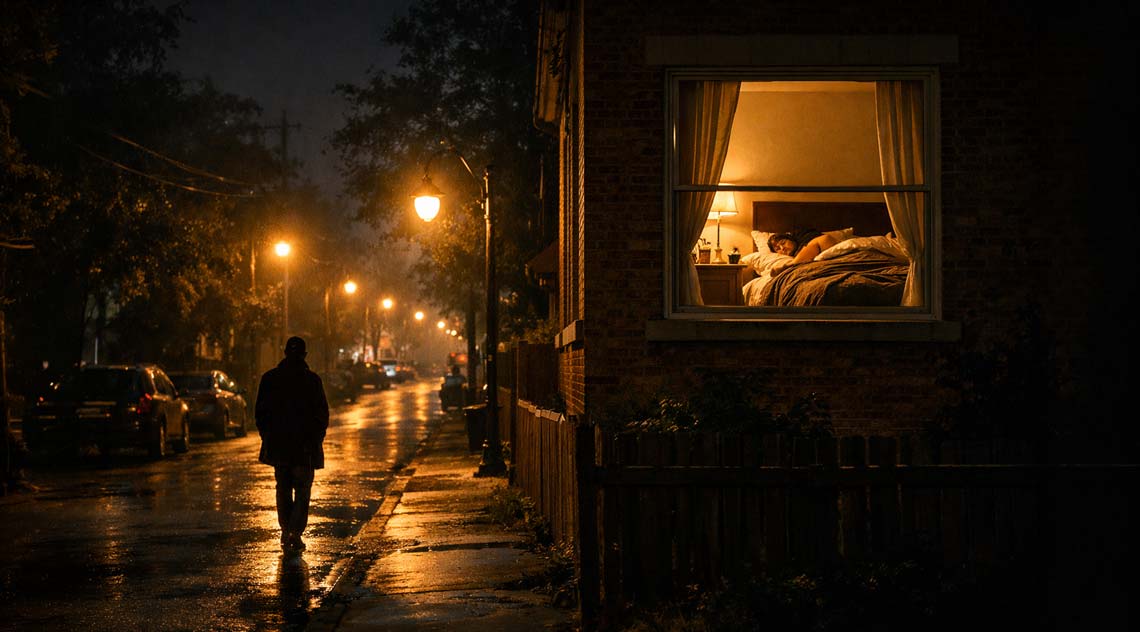
Noctivagant and Clinomania make a comfortable but odd pair of words. Noctivagant describes a person who wanders, sometimes aimlessly, through the night. Clinomania refers to a person who refuses to leave the bed. This odd connection between nocturnal action and inaction gives you a clean understanding of both words.
Noctivagant
Noctivagant is originally a Latin word, noctivagus, meaning night wandering. It is used as both a noun and an adjective describing someone who moves around in the dead of night. In fiction and folklore, a vampire would be a noctivagant. A person who wanders at night, moving through darkness while others sleep.
“Jim, a noctivagant, lived a quiet life, walking the neighborhood after midnight when all was quiet.”
“Her thoughts settled only during her noctivagant walks.”
“Sally’s dog followed a noctivagant path, silently walking beside her on midnight walks.”
Clinomania
An obsessive desire to remain in bed, driven by comfort, exhaustion, or quiet refusal. It describes a feeling, not a medical condition. A noun that is particularly useful once people know it, because it aptly describes something most of us feel at some point in our lives.
“After the wreck, Joe developed clinomania and would not rise until noon, as if his bed were the last safe place on earth.”
“Kelly treated her clinomania as a kind of truce with the world, making her feel safer on wet, rainy days.”
“Jane’s clinomania on winter weekends made her bedroom feel like a warm retreat.”
Noctivagant and Clinomania Together
A person can be both a night wanderer and a bed loyalist, moving between motion and stillness in search of peace. These two words work well together, but do not make sentences that people would often know or understand.
“Terry’s noctivagant walks through the sleepy town were offset by the deep clinomania he developed at dawn.”
“Tony carried a quiet clinomania that kept her in bed, yet a noctivagant impulse pulled her into the night after watching vampire movies.”
“Together they enjoyed the dark streets and the warm bed as equal forms of refuge, satisfying their noctivagant roaming and their clinomania retreat.”