
Given the scarcity of decent movies and TV programs these days, I have inadvertently become a classic film cineaste.
Almost as a ritual, my Sunday’s day of rest starts with making pancakes and bacon and watching Turner Classic movies. (Not to worry, I go to Saturday evening Mass, so I fulfill my Sunday obligation to the One who matters.) I keep my “day of rest” mainly on the couch. At 10 am, Noir Alley begins. Starting my binge of classic movies with host Eddie Muller.
The hosts of Turner Classic Movies play an integral role, as they set up the movie’s plot, provide insights into the stars, and offer a follow-up at the end of the movie. Eddie Muller has a passion for Noir and his enthusiasm is infectious.
Noir films are unique. Generally produced in the 1940s and 1950s. There is usually a crime, often murder, in the plot. Then a cover-up, denial, or a chase to get the bad guys. There is a lineup of good guys (mostly the law) and bad guys, the perpetrators. The fun is when these two lines get blurred. These films were produced during a time when censorship heavily influenced the content of the movie industry. No explicit sex, no bloody murders. (Just use your imagination.)
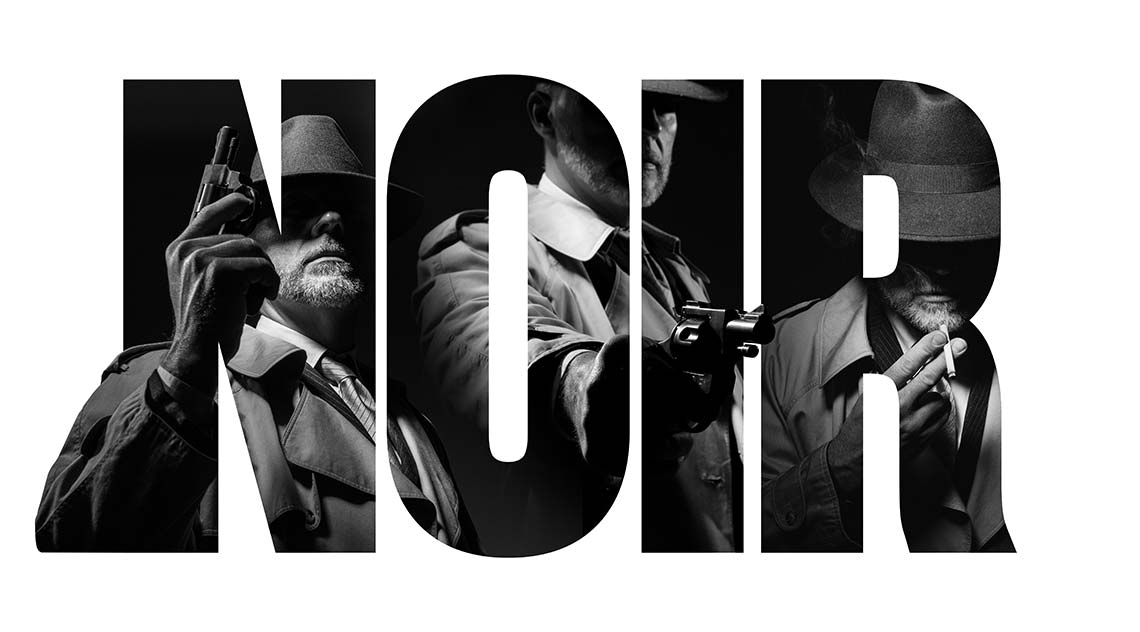
Noir, of course, is French for black, or dark. The black and white filming of these movies would often be used to exaggerate the light and darkness of the setting. Shadows introduced a moodiness and a cynical or pessimistic feel to the plot. Frequently betraying the underlying sense of a character.
Since movies were the main form of entertainment in that era, many well-known actors and actresses starred in what would become known as Noir movies. My initial interest in this genre stemmed from my first viewing of ‘Double Indemnity’ with Fred MacMurray and Barbara Stanwyck. I saw it decades ago, but it stuck with me. Up until then, I had only known Fred MacMurray as the father of ‘My Three Sons’ fame on TV. Another big name from that movie was Edward G. Robinson.
Barbara Stanwyck and Fred MacMurray teamed up again in ‘There’s Always Tomorrow.’ Not a noir movie, but a great film featuring a strong leading lady whose true morals remain unknown until the very end.
Barbara Stanwyck is now one of my favorite actresses. I love finding her in movies I have yet to see. Ironically, I knew nothing about her during my childhood TV viewing days. I was not into westerns, so I never watched ‘The Big Valley.’
‘Clash by Night’ is another great Noir with Barbara Stanwyck. She plays those not-so-good girls to perfection. You know she has got a past, but you want to see her make good. Other familiar faces in this Noir flick were Robert Ryan, Paul Douglas, and Marilyn Monroe.
Robert Ryan is a repeat, standout in the noir genre. He plays a great good guy/bad guy, or chump taken in by the wiles of some bewitching vixen. You do not know if you are going to love him or hate him until you are halfway into the movie.
Another heavy hitter in the movie business at that time was Rosalind Russell. She played a noir role as a career-obsessed actress in ‘The Velvet Touch,’ trying to get away with murder.
These movies often appear as romances gone astray, or love triangles interrupted by murder. To me, the ladies always steal the show. Femme fatales.
‘Gun Crazy’ was probably ahead of its time for its shocking plot. Actress Peggy Cummings plays a gun-loving, danger-driven, sharpshooter whose morals go out the window when she sees something she wants. Some say this harkens to Bonnie and Clyde. But I disagree. Gun Crazy was filled with undertones of sexual tensions, passions, and a touch of crazy. 1967’s ‘Bonnie and Clyde’ was released after film censorship had relaxed, allowing for more blatant violence. Warren Beatty, Faye Dunaway, and Gene Hackman all gained popularity from this film. To me, it merely documented a bloody, violent rampage in a not-so-interesting plot.
Due to the censorship and Codes of the day, Noir bad guys were not supposed to get away with murder. So, the endings of these movies often featured our main characters being killed off or reformed, frequently in a last-minute twist. It was just not the American way to get away with murder. Crime does not pay. These plot revisions were often made to the dismay of the original writers.
So, the next time you want to get a glimpse of the good old, bad America, packed with love, hate, greed, classic cars, modest and not so modest fashion, and a splash of good conscience thrown in, tune in at 10 a.m. Sunday mornings (or midnight on Saturday night) to Noir Alley on Turner Classic Movies. You will be glad you did.