

The term “Founding Fathers” carries the weight of history, a legacy of vision and leadership. As we approach the Presidential election, pausing to reflect on who the Founding Fathers were seems essential.
“If I have seen further than others, it is by standing upon the shoulders of giants.”
Sir Isaac Newton
When Isaac Newton made this observation, he was locked in a perpetual debate over scientific principles and observations with Robert Hooke of the Royal Academy of Science. This debate, which continues to shape our understanding of knowledge progression, was a clash of two brilliant minds. Hooke believed that knowledge grew from a perpetual cycle of original discovery. On the other hand, Newton championed the idea that new ideas and discoveries were built on cumulative knowledge and evolved from the existing foundation of knowledge. I side with Newton and his belief in the power of cumulative expertise in shaping history.
Signers of the Declaration of Independence
The fifty-six signers of the Declaration of Independence laid the foundation of the United States. They got the ball rolling with documents and events that separated us from England. The question of who among them genuinely earned this Founding Father title, whether it is all fifty-six or a select few like Washington, Jefferson, Madison, or Monroe, is a matter of discussion, debate, and reverence.
Then, there is the question of whether the signing of the Declaration of Independence was a “qualifier” for membership in this group. For sure Washington was in the Founding Fathers group but was not there. Like many, I think of this group as the Founding Fathers, but that is an imprecise definition.
Learning From Experience
Examining the American Revolution and the events that led to the Declaration of Independence reveals a rich tapestry of interconnected knowledge. These were not isolated, spontaneous occurrences. They were deeply rooted in the history of European monarchies and the evolving landscape of America. This interconnectedness is a testament to American history’s intricate and profound nature.
One thing that points to learning from cumulative knowledge in the history of America is the composition of the Declaration of Independence signers. In 1776, the average lifespan of a white male in the colonies was only thirty-eight years. With a total population of two and one-half million, the Colonies were a fraction of today’s America in size and complexity. In 1776, disease was rampant by modern standards, and many people died in infancy or died very young. Yet, the collective wisdom and knowledge of these signers shaped the course of our nation, demonstrating the power of cumulative knowledge in our history.
Age Distribution
The age distribution of the signers tells a story by itself. Most of these were people in the upper rung of society with access to food and healthcare. Healthcare would have been primitive by modern standards, but on a level playing field, their care was better than others. We probably should say they had access to adequate food since our definition of healthy food would have differed greatly.
Eighteen of the signers were thirty-eight or younger. Two, Thomas Lynch Jr. and Edward Rutledge, from South Carolina, were only twenty-six. Thirty-nine were under fifty; the oldest was Benjamin Franklin at age seventy. Having lived to be just short of twice the average lifespan of most, Franklin was probably viewed as a wise sage,
Professions
We often lament lawyers’ involvement in the political and legislative processes, but in the group, twenty-five considered the law to be at least part of their profession. Ten were farmers, plantation owners, or involved in land speculation. Fifteen were merchants, but John Witherspoon and Lyman Hall were the only ministers. Also in the group were four physicians, but only Franklin, Jefferson, and Robert Treat Paine listed part of their profession as scientists.
Franklin was not the only famous polymath in the group, as it would be easy to consider Jefferson one. No matter the profession, classification, or age, these were some of the greatest minds of the age. They came together and hammered out a document that set the colonies on a course for freedom, creating a nation like no other.
So, Who Were the Founding Fathers?
Unfortunately, the definition of “Founding Father” is loose and expands and contracts with any discussion. Some define it as broadly as all fifty-six representatives in the room when the Declaration of Independence was signed. On the other hand, some want to include anyone in the colonies who had helped with the war effort on the Colonies’ side.
Others want to rewrite history and involve women. Women played a significant role in the nation’s founding but were not in the room when the Declaration of Independence was debated and agreed upon. Prominent and influential women are included in other discussions, but not the Founding Fathers. It was a different time, with distinct and defined roles.
I have seen serious lists that include as many as eleven founders and some with as few as four. However, all lists I found included six men: John Adams, Benjamin Franklin, Alexander Hamilton, Thomas Jefferson, James Madison, and George Washington.
Many of the lists that expand to seven always include John Jay. However, many others, such as John Hancock, Patrick Henry, Thomas Payne, Samuel Adams, and John Marshall, will get honorable mentions and are familiar names. All of these men played a significant role in the nation’s founding. Since this list can expand or contract with the writer’s preference, I will stick with the consensus six.

John Adams
There is no argument about John Adams’ influence on the course and direction of the colonies and early nation. As our second President, he had a significant impact on the development of the Presidency. He was the father of our sixth President, John Quincy Adams. Adams also served as George Washington’s Vice President.
Adams was also an attorney, diplomat, and writer. He was among the earliest patriots to oppose the Stamp Act and nominated George Washington to lead the army.
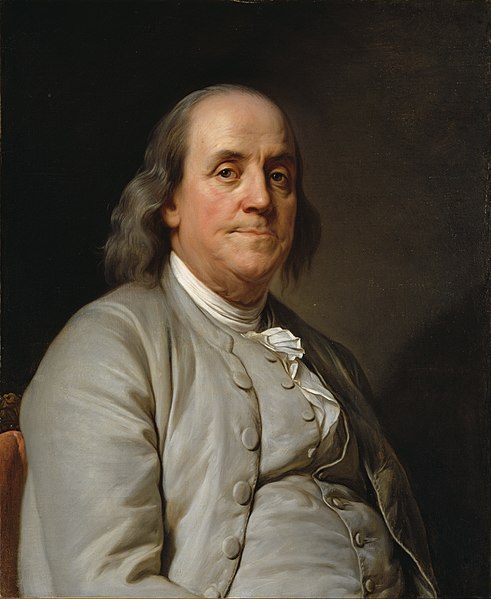
Benjamin Franklin
Benjamin Franklin never served as President but had an immense influence on the founding of the Nation. As an inventor, publisher, scientist, and diplomat, he was front and center for all the action and a well-known figure in Europe and America..
Franklin was pivotal in drafting the Declaration of Independence and the Constitution. By the time of the Constitutional Convention, he was eighty-one and a senior statesman.

Alexander Hamilton
Alexander Hamilton did not sign the Declaration of Independence but attended the Constitutional Convention. He was a colonel in the Continental Army and the first Secretary of the Treasury.
Hamilton had a significant influence on early fiscal thinking and finance. Unfortunately he may be most remembered for his duel with Aaron Burr
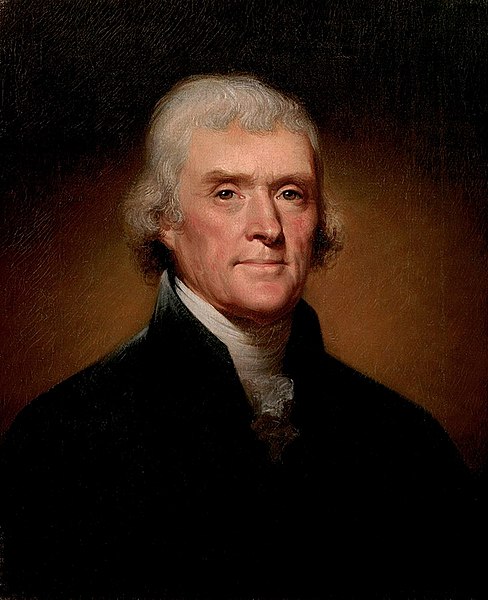
Thomas Jefferson
For me, Thomas Jefferson is the central figure in the founding of the United States. His influence on the Declaration of Independence, service as our third President, and national expansion through the Louisiana Purchase speaks to his greatness.
But he was also a scientist and, I think, a polymath for his relentless pursuit of education. He also played a pivotal role in the founding of the University of Virginia in Charlottesville.
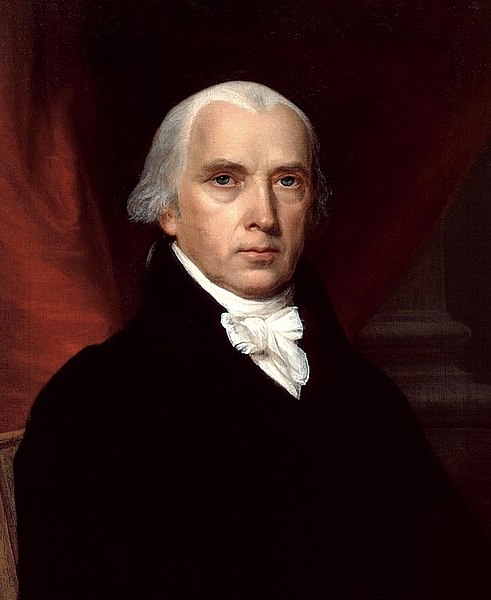
James Madison
James Madison was also an attorney and a delegate to the 1787 Constitutional Convention. He was outspoken in his support for the Constitution and contributed to the Federalist Papers.
As much as anyone, he contributed thought and ideas into the makeup of the Constitution. He was a strong advocate for our separation of powers. He served as our fourth President.

George Washington
Washington was not there to debate or sign the Declaration of Independence. Still, he would be universally accepted as a founding father because of his critical role in the war and his influence on shaping the Presidency.
During the debate and signing of the Declaration, he was already planning and organizing the Continental Army. It would take considerable time to document all Washington did for the nation, but among his major contributions was allowing the nation to resist the temptation to make him king. By doing so, he laid the groundwork for limiting the power of the Presidency.
This is my list of Founding Fathers, and I hope you study American History in enough detail to form your own opinion. For me, the right path is to define the list narrowly while acknowledging the significant work and contributions of many others. Otherwise, the debate never ends.
All these men had faults; but if we dwell on their shortcomings, we ignore their brilliant work and achievements. But one thing is sure for all who enjoy our freedoms. These are the giants on whose shoulders we stand to enjoy the freedoms and life we have today.
As we vote for the next President in November, it is essential to remember our founding principles and the importance of building on our legacy. Knowledge is cumulative, not spontaneous, and those who seek to build on our nation’s legacy, not destroy it, deserve our votes.
"Not until I went into the churches of America and heard her pulpits flame with righteousness did I understand the secret of her genius and power. America is great because she is good, and if America ever ceases to be good, she will cease to be great."
Attributed to Alexis de Tocqueville
Resources
10 Surprising Things About 1776 That Put the Fourth of July in Perspective, By Bill Murphy, Jr. INC, inc.com, July 3, 2020.
Did any of our “Founding Fathers” NOT sign the Declaration of Independence?, By Declaration Research Project, Harvard University, harvard.edu, Last accessed August 27, 2024.
Founding Fathers of the United States, By Tanish Saifi, TS Historical Encyclopedia, tshistorical.com, Last accessed August 27, 2024.
Founding Fathers of the United States, Wikipedia, Wikipedia.org, Last accessed August 10, 2024.
How do you define “Founding Fathers”?, By Editors, Journal of the American Revolution, allthingsliberty.com, December 1, 2015.
Standing on the Shoulders of Giants: The Story Behind Newton’s Famous Metaphor for How Knowledge Progresses, By Maria Popova, The Marginalian, themarginalian.org, February 16, 2016.
Who Were the Founding Fathers?, By The Historian, Have Fun with History, havefunwithhistory.com, January 24, 2023.