
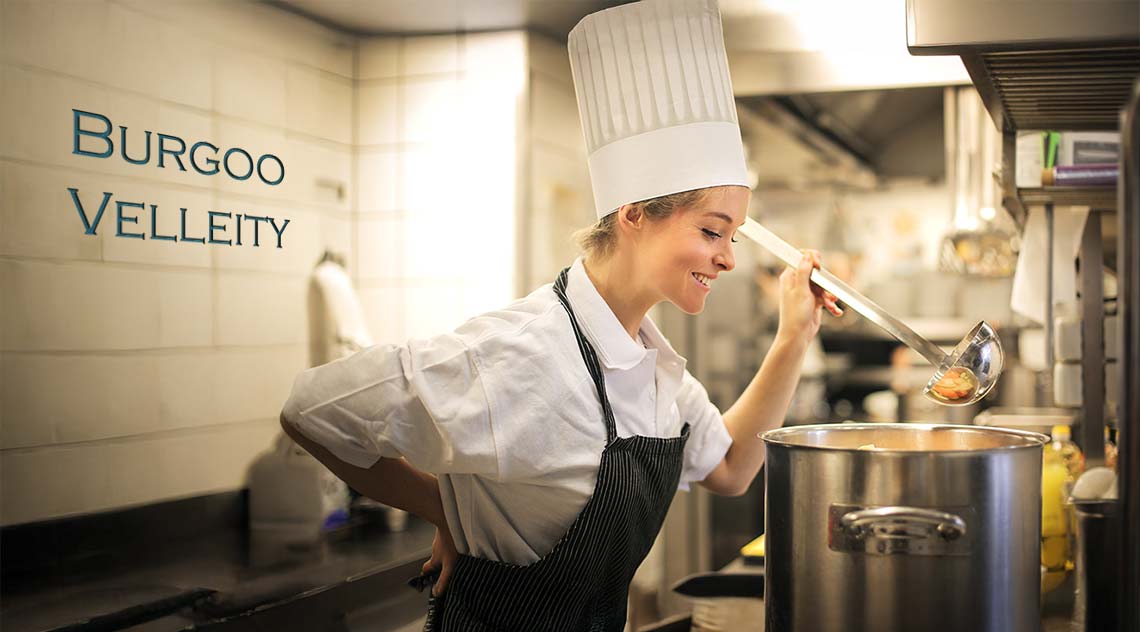
The word burgoo is used to describe a Kentucky stew, like a Mulligan or Irish. Kentucky burgoo is more like a pot of meats, vegetables, broths, and lots of seasonings, all cooked at once. For many, it is always served with cornbread or corn muffins.
Here on the southern Atlantic coast, a Low Country Boil might be considered a seafood equivalent meal.
While the term originated in England or Kentucky, it can refer to a porridge or stew served in the British Navy.
“The captain considered his cooks the best at preparing the traditional burgoo on his ships.”
“The chef tricked everyone by serving up nothing more than burgoo in China bowls and giving it a fancy name and price tag.”
“After months at sea, the crew was tired of burgoo and cornbread as their daily rations and were ready to dock anywhere.”

Velleity is a word rarely used but more than helpful these days when expressing the laziness we see in life. While not in everyone’s vocabulary, its use has steadily grown since the early 1970s. Velleity means the lowest amount of desire to exert effort to attain something. I think of it as a slight desire or inquisitiveness with no follow-through.
“Sam’s slight velleity for Cheetos, which he saw in commercials, did not motivate him to go to the store and get some.”
“Sally’s once velleity for the piano finally developed into a real interest, and she learned to play well enough to entertain her friends.”
“George’s velleity was insufficient to drive his business forward, and he ultimately had to declare bankruptcy.”
Combining burgoo and velleity into a single sentence is not easy because they seem unrelated. But combining them with a bit of thought makes it happen.
“Overcoming her innate velleity, Jill concocted a delicious burgoo, ensuring her gatherings were never short of laughter and surprises.”
“Even her penchant for velleity could not dampen her joy when a steaming bowl of burgoo arrived.”