
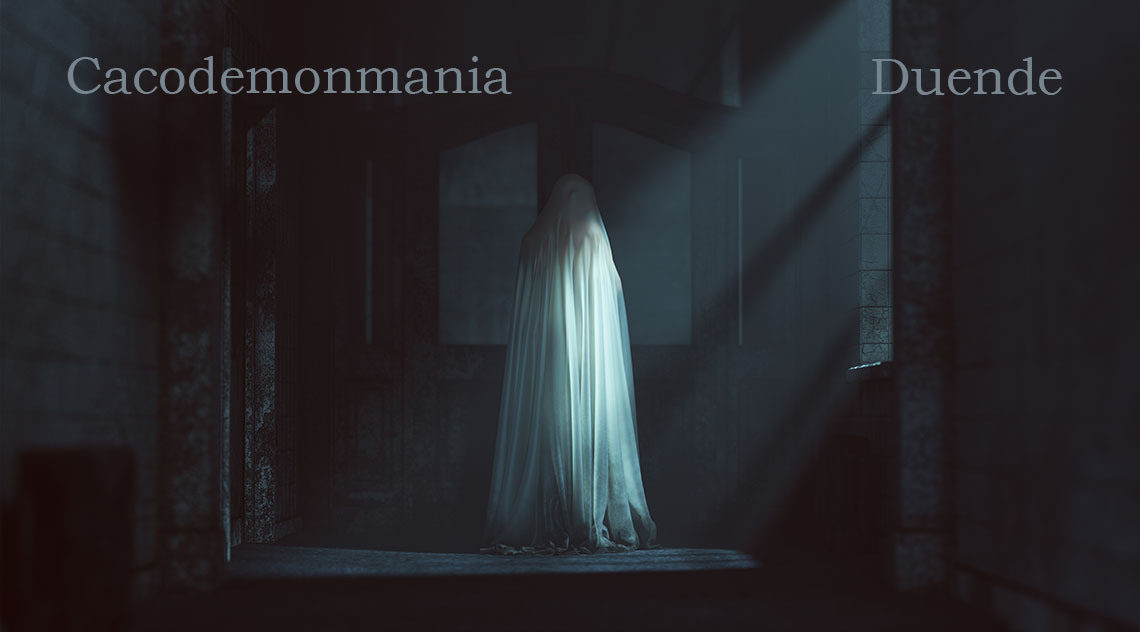
Cacodemonomania is not a term commonly encountered in conversation. The last few letters of the word “mania” are a bit of a giveaway as to its meaning. People who have a delusion of being possessed by evil spirits have cacodemonomania.
Colloquially pronounced “Kack e demon no mania,” the term is often associated with a psychiatric condition where an individual may believe that he or she is under the influence of evil forces.
“Many of Edgar Allan Poe’s writings were so dark that they may point to a belief in cacodemonomania.”
“When I first heard the term cacodemonomania, Dante’s Inferno came to mind.”
“Tormented by relentless nightmares and a growing sense of dread, the reclusive man was eventually diagnosed with cacodemonomania.”

In some Latin cultures, a duende is a figure from folklore. In English, we might refer to them as goblins, elves, or spirits. I immediately thought of Dobby the house elf in the Harry Potter series. While Dobby was mischievous, he did not have the physical traits of a duende. Pronounced “du end day.”
There is a second meaning for duende that refers to the arts or artistic endeavors. Here, duende means a feeling.
“She claimed a duende lived in her attic, rearranging furniture when no one was home.”
“I swear that we have a duende living in the house that rearranges things in the kitchen.”
“The dancer had real duende and brought the audience to a standing ovation at the end of her performance.”
Here are three sentences using both words, and these are not easy to blend.
“The villagers spoke of duendes in the forest, but his nightmares hinted at cacodemonomania instead.”
“He painted with real duende, each stroke battling the cacodemonomania that haunted his sleepless nights.”
“She blamed the broken dishes on a duende, but her therapist suspected cacodemonomania.”