
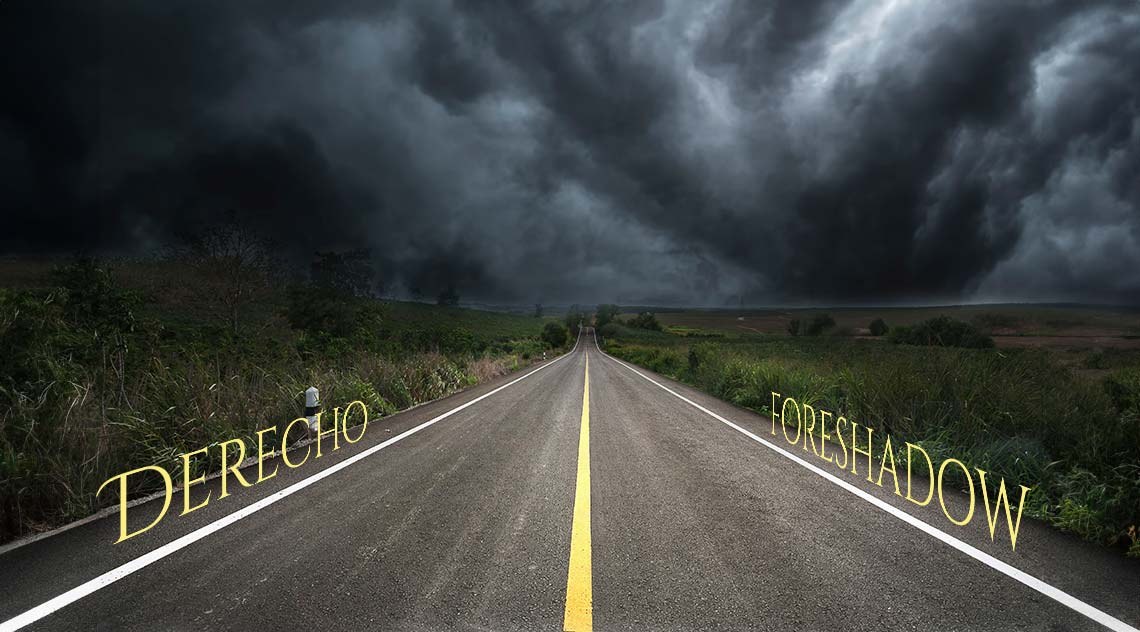
The word derecho is a noun, and we first heard it on a show chronicling weather events in the Midwestern United States, although they can occur anywhere. Derechos are rare weather events defined as dangerous straight-line winds covering a wide area as they pass through. The winds can reach hurricane or tornado speeds and cause widespread damage, usually including many thunderstorms.
Derechos are summer or warm weather events that cause widespread wind damage, flooding, and heavy rain. The word derecho is a Spanish adjective meaning “straight.” This distinguishes them from tornadoes, which are always rotating wind events. NOAA defines a derecho as an event causing wind damage for more than 400 miles, having sustained wind gusts of at least 58 miles per hour and several wind gusts of at least 75 miles per hour. Four documented derechos have occurred in the United States through July 2024.
“The derecho appeared suddenly from the dark skies and destroyed the town in a matter of minutes.”
“My uncle’s barns and house were blown down in a derecho event last year.”

Foreshadow is a word, specifically a verb, that means to perceive something before it happens. However, we most often use slightly different variations of the word, such as foreshadowed, foreshadower, foreshadowing, or foreshadows. The first recorded use of the word foreshadow was in 1577.
Foreshadow is sometimes confused with pre-shadow, but pre-shadow seems to have some disagreement as to proper use.
“George’s ultimate problems were foreshadowed in the early years of his career.”
“Music in a movie or play can foreshadow perilous events to come.”
“The high winds and rain foreshadowed the hurricane’s arrival.”
Of course, these two words can be combined into a single sentence.
“The ominous dark clouds and sudden drop in temperature foreshadowed the arrival of a powerful derecho, leaving the town’s residents bracing for the impending storm.”
“The eerie silence seemed to foreshadow the arrival of a derecho, a storm so devastating it would leave a path of destruction for miles.”