
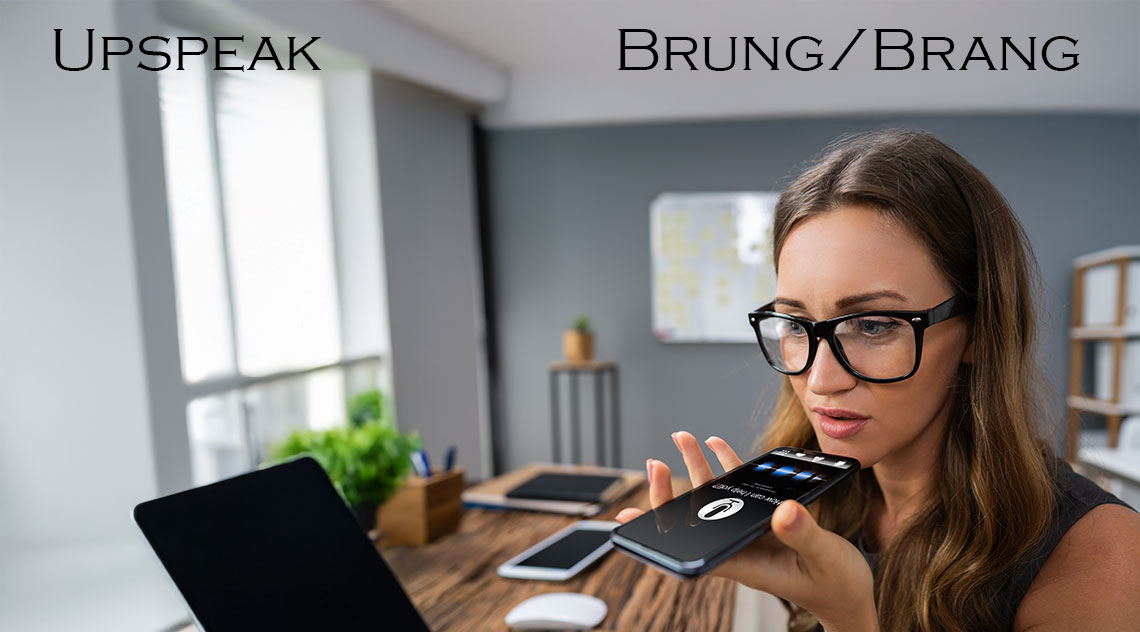
In all likelihood, you know what the word upspeak means, you do not know you know. For me, this is one of those annoying habits that has infiltrated our language and society and needs to be eliminated. However, for many millennials and younger people, this has become so ingrained and entrenched in the culture that removing it will take time. The primary way it will be replaced is by something even more annoying.
People who upspeak do so by having an inflection in their voice that causes them to end sentences at a higher pitch. Their sentences do not end with a statement or purpose, but with an implied question or seeking validation. The reason can be a lack of confidence, habit, mimicking others, or any other annoying reason. While it can be an annoying habit for both men and women, in my experience, women seem to upspeak more than men.
I believe it is a desire to control the audience, where you draw others into your conversation. A similar habit is ending sentences with the word “right.” When used, this is a question, not a statement. And if you want to make a sentence annoying, end it with “right” while upspeaking on an open cellphone conversation in a restaurant.
“Her presentation was succinct, but her constant upspeak made her conclusions sound tentative rather than confident.”
“Some educators argue that upspeak is not just a filler but a nuanced tool for generating power.”
“In the interview, he deliberately avoided upspeaking to be sure he projected decisiveness and authority.”

Brung and brang are not words; they are slang for the word “brought.” Unfortunately, you can hear them conversationally more often than you would like. I would also conclude that they are interchangeably incorrect.
But brung and brang can be two of those illogical conclusions one might draw from the English language. When considering the past tense of other words like sing and sang, ring and rang, one might conclude that bring and brang also work similarly in English. We have a natural tendency to find patterns, even when they are not there or incorrect.
“She brang her dog to the picnic even though it was not allowed.”
“I could have sworn that he brung that shirt to the laundry yesterday even though they said they did not have it.”
“They brung hot dogs for everybody just like they promised.”
Knowing and accepting that brung and brang are just slang, pardon these sentences with both upspeak and brung or brang.
“Even though she brang all the sandwiches for the group picnic, her upspeak made it sound like she wasn’t sure she brung enough.”
“He brang his old guitar to the karaoke night, and with a bit of upspeak, asked if anyone wanted to hear something from the ’80s?”
“She brung cupcakes to the meeting, and with a hint of upspeak, asked, ‘Is chocolate okay for everyone?’”