The word Zeitgeist is derived from the German words Zeit meaning “time” and Geist meaning “spirit.” Zeitgeist is often capitalized and is used to refer to something that captures “the spirit of an age or era.”
“Songs by the Mamas and Papas are seen as capturing the zeitgeist of the 1960s.”
“When we look back, we believe we will see that artificial intelligence was the zeitgeist of the early twenty-first century.”
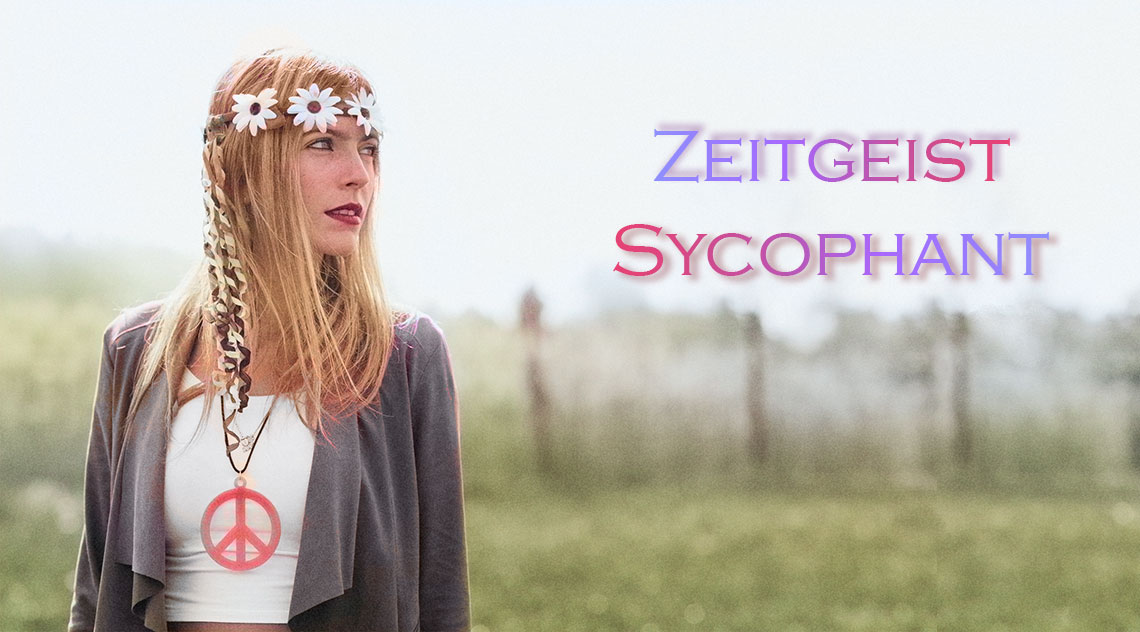
“Jane was forever a flower child and evoked the zeitgeist of the 1960s wherever she went.”

A “sycophant” is a person who gives real or false praise to someone to gain favor. In slang terms, we would refer to this person as someone who “sucks up” to someone to gain advantages. Derogatively we would call them a boot licker.
“Elliot was considered a sycophant because of his constant false praise of his boss.”
“Ruth was a sycophant and constantly gave people praise who did not deserve it.”