
Rediscovery and Reverence
When a Millennial or Gen Z person walks into a centuries-old cathedral, they might be overwhelmed by the building’s size and scope or the grandeur of the carvings and other work. But they may never have set foot in a church. Their world is one of instant reactions and feedback, virtual reality, and worldwide electronic communication. Grasping the dedication and effort required to build a cathedral may be beyond them. An effort that spans generations is beyond the scope of most. In a world filled with instant feedback and gratification, sacred structures can wrap you in comfort. The permanence of a cathedral itself feels divine. The light that falls on ancient walls is like the faith that endures when the Church forgets its parishioners.
Rumblings of a New Awakening
We have often written about the Great Awakenings and the need for and possibility of another in the near future. Destabilizing economic conditions, unemployment, and living in a world where national and geopolitical factors create uncertainty can all be catalysts for a reawakening. When we couple these with the uncertainty posed by modern technologies, there is enough anxiety to satisfy everyone, regardless of age or economic condition. In times of uncertainty, the church has often played a stabilizing role by fostering an environment of care and concern.
Why Churches Struggle to Recover
Frantic activity, clever programs, or last-minute interventions cannot reverse the decline of any church. Church attendance is a personal decision and must be addressed in terms of devotion, obedience, and acceptance. This has made meaningful recovery difficult. Schisms and lesser internal squabbles over doctrine, money, and social issues have torn many denominations apart from within. Add to these internal issues secular attacks on religion in general, and you create an environment where church attendance wanes. Throughout history, cultural distractions have led to spiritual decline.
When Football Claimed the Sabbath
One of the major attacks on churches and religion came with the Sports Broadcasting Act of 1961. In football, Friday nights belong to high schools, Saturdays to colleges, and Sundays to professional football. As with most things in Congress, trying to preserve Friday and Saturday for one group had unintended consequences. In a country obsessed with football, churches had little chance. These changes coincided with the rise of televised sports and the availability of a nationwide audience.
The church of the NFL gradually replaced the real Church, one weekend at a time. No one forced people to stay home for football; it simply seemed to take over household after household. Sportswriters and NFL management began to lay claim to Sunday. Fans and critics alike pushed the idea that “Sunday became the NFL’s property under (Pete) Roselle.”
Staying home watching football was easier than getting up, getting dressed, and driving to your local church. As a result, family traditions and commitments were broken. Local churches did not offer alternatives that either brought members back or met them where they wanted to participate. At times, this void was filled by evangelists who were more showmen and showwomen than ministers. These evangelists understood the power of electronic media and captured a portion of the national audience.
The Original Pillars of the Church
When I was growing up, mothers and women were often the stabilizing influence on family life and on attendance at worship services. Since the time of Christ, women have played a significant role in the Christian Church. From Mary, the mother of Jesus, to Mary Magdalene, to Priscilla, to Phoebe, women played a vital role in teaching and hosting church gatherings. This began to unravel in the 1960s.
I often tell our children and grandchildren that if they see anything wrong with America, it traces back to President Johnson and his “Great Society” initiatives. Everything from excessive personal and national debt to women working outside the home, to the rise in divorce and single-parent families, to teenage crime, to widespread drug use all originated in this era. Johnson was privately a racist and publicly a racial reformer, often pursuing power rather than positive reforms. His decision to finance rather than pay for the Vietnam War also shifted public attitudes toward national and personal debt.
The rise of inflation and debt, along with the need for two incomes, also broke traditional family roles. Many women have always worked outside the home, but since the 1960s, it has become a necessity rather than a choice for many. Since the Carter years, two incomes have been needed to maintain the post-World War II lifestyle. This shift broke the traditional family structure, fostered acceptance of divorce, and, worst of all, made abortions acceptable.
Many women who had been the bedrock of families wanted out, and the Baby Boomer generation offered them a path. If you see something wrong in our society, look to Lyndon Johnson and his Great Society nonsense. Look to the acceptance of moral decay that began with the Baby Boomers. As it pertains to the decay of family life and morals, we are the generation that mistook liberation for license. This shirking of family responsibilities is evident in rising divorce rates, one-parent households, abortions, and teenage crime. These are not lifestyle improvements; they are the moral decay of excess. It is not that people attend church in fewer numbers; rather, the loss of a sense of community and the failure to pass on family traditions can result in lower attendance.
How the Center of Faith Shifted
As our society has become more urban, it has become more secular. As populations shifted north and west, cultural and family values changed. As traditional denominations squabbled over doctrine and money, parishioners of all ages lost interest. As sexual and embezzlement scandals among worship leaders rose, belief in leadership waned.
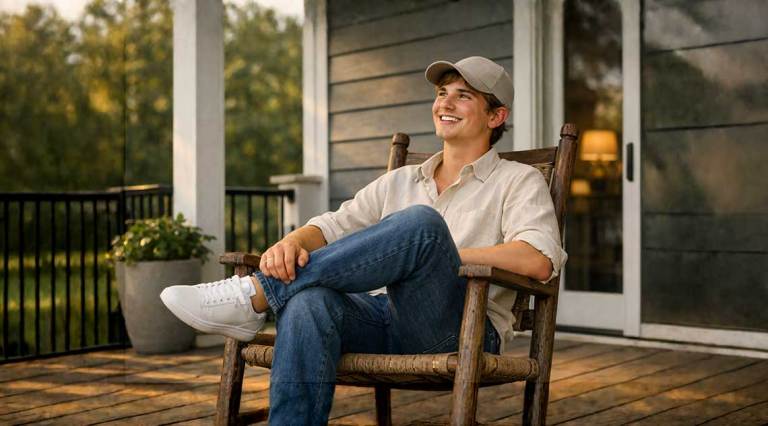
Today, we are finally seeing awareness of these shifts and their negative impact on families and society. While mainline Protestant denominations have suffered, new evangelical and charismatic churches have risen. I believe this signals a growing awareness of religion’s importance among younger worshipers. As Baby Boomers rebelled against their parents’ faith, Millennials and Gen Z are rebelling against their parents’ lack of faith. Millennials and Gen Z know something is wrong, and they are searching for answers.
Millennials and Gen Z have grown up in a world filled with electronics. It is little wonder that they would turn to faiths that offer more stimulating worship services. COVID also pushed us further in this direction as we were confined to our homes. Traditional religious scholars and denominations have rebelled against this shift as power and money shift. Younger parishioners see through this and want worship and an escape from the daily confusion of life, not endless conflict.
If you doubt the connections among church attendance, secularism, urbanization, and social agendas, look at the COVID era. Church services and gatherings were banned in some areas, while more secular activities were allowed. Our society looked more like an authoritarian Communist country than America. We returned to secret, unadvertised gatherings to maintain the faith. We saw only a sliver of what early Christians endured to advance the faith.
New Light Through Old Windows
But there is hope on the horizon. If we know anything from history, we know the Church of Jesus Christ cannot be stamped out. The form of worship might change, and the scholarly nature of services might change, but core beliefs endure. Denominations, church buildings, cathedrals, and styles of worship are human inventions, not God’s.
“For where two or three gather in my name, there am I with them.”
Matthew: 18:20 (NIV)
Baby Boomers are dying out, and with them may go some of the trends that have poisoned American religious culture. But I believe the numbers are exaggerated by those who attack the Church. It is not unusual for elderly members to worship via radio, television, and now the internet. This is not a lack of interest; it is a necessity that comes with old age. This is one way the old and the young connect, one out of necessity and the other out of preference.
As we redefine what it means to attend church, I believe we will see increased attendance, not because of a desire to show better numbers, but because we have new ways to connect and will better understand those connections.
The Gathering Storm Against Faith
As Marxists and Communists rise as leaders in the Democratic Party, those who have fought against the Church are finally coming out into the open. Right now, in our society, it is these politicians who have finally shown their true colors and revealed a proud association with ideologies that favor atheism. For many of these politicians, the State is their God. We are in a fight to save the hearts and minds of our youth, and we must not lose. It has become a battle between spirituality, politics, and secular ideology. As Millennials and Gen Z turn back to faith, we must be there to greet them.
Resources and Further Reading
2025 Church Attendance Trends: Unveiling U.S. Membership and Service Statistics, by Matt Strelecki, VANCO, vancopayments.com, April 3, 2025.
A ‘generational reversal’ is underway: Gen Z and millennials are now the most church-going groups, study finds, DeseretNews, deseret.com, September 3, 2025.
Gen Z And Millennial Men Driving New Church Attendance Trend, by Cassidy Grom, ReligionUnplugged, religionunplugged.com, October 9, 2025.
Gen Z attending church more often than older people – survey, by Ryan Foley, Christian Today, christiantoday.com, September 9, 2025.
Gen Z men returning to church in surprising numbers in faith resurgence, by Mitch Picasso, FOX News, foxnews.com, October 4, 2025.
New Barna Data: Young Adults Lead a Resurgence in Church Attendance, by Staff, Barna, barna.com, September 2, 2025.
New Research: Do Americans Think Spiritual Revival is Coming?, by Staff, Barna, barna.com, March 30, 2026.
New study shows Gen Z and Millennials are now the most regular churchgoers, by Sarah Bunyea, Religion News Service, religionnews.com, September 3, 2025.
Religious attendance and congregational involvement, by Gregory A. Smith, Alan Cooperman, Becka A Alper, Besheer Mohamed, Chip Rotolo, Patricia Tevington, Justin Nortey, Asta Kallo, Jeff Diamant, and Dalia Fahmy, Pew Research Center, pewsearch.org, February 26, 2025.
The Decline and Recent Stabilization of Church Attendance in America: A Five-Decade Overview, Grow Stronger Roots, growstrongerroots.com, December 20, 2025.
The Great Falling Away: The Decline in Religious Services Attendance in the United States Over the Past 50 Years, by Jonathan Abbamonte, The Heritage Foundation, heritage.org, July 17, 2025.
Were the Disciples Unschooled Ordinary Men?, by Gail Wallace, the Junia project, juniaproject.com, September 25, 2013.
Why Sundays Belong to The NFL: The Forgotten 1961 Law That Changed Sports Forever, by Jorge Lopez, Secret Los Angeles, secretlosangeles.com, September 22, 2025.