

Many years ago, we were sitting in the First Presbyterian Church in Orlando, listening to our senior minister, Dr. Howard Edington, give one of his many outstanding and thought-provoking sermons. I must confess that I do not remember the context of the whole message, but I do remember the opening. After all these years, I will need to paraphrase his words, but in introducing his topic, Dr. Edington posited these two questions:
“You are walking home from work late one night on a dimly lit street and encounter a group of young people heading your way. They are covered in tattoos and piercings and dressed like a motorcycle gang.
Would it elicit a sense of dread or fear in you?
How would it change your perspective if you knew they were headed home from Bible Study?”
Dr. Howard Edington (Paraphrased)
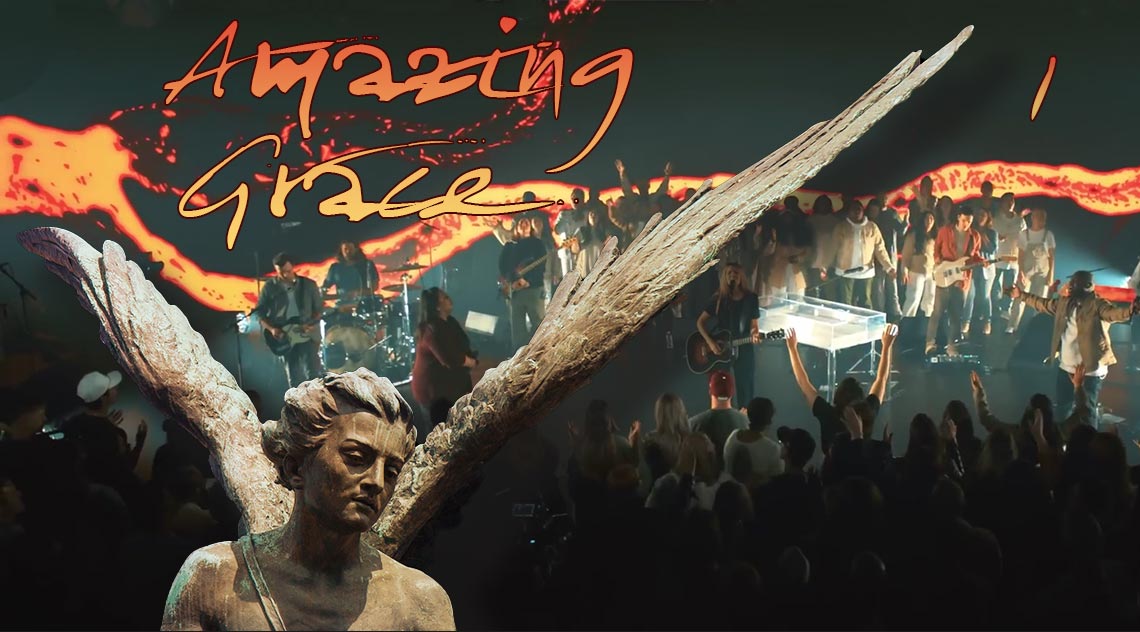
The hymn Amazing Grace, which turned 251 years old this year, holds a universal appeal and is considered by many to be the greatest religious hymn ever written. It transcends time and culture, regularly voted the most popular religious song decade after decade. Singing it publicly is a rite of passage for many modern-day well-known singers, and it has been embraced by diverse artists such as Aretha Franklin, Willie Nelson, Alan Jackson, Andrea Bocelli, and Judy Collins. It is sung at religious events, funerals, weddings, and coronations, uniting people in a shared emotional experience.
The Dilemma of Amazing Grace
John Newton, a renowned English sea captain, was once deeply involved in the slave trade in the 1740s. However, a life-altering storm off the coast of Ireland in 1748 marked a turning point in his life. In desperation, he struck a pact with God, vowing to dedicate his life to His service if saved. This profound experience led to his eventual acceptance into the ministry by the Church of England in 1764, a testament to the power of redemption and the transformative nature of faith despite his lack of formal education and unconventional past.
Newton’s journey led him to a small church in Buckinghamshire, where his congregation consisted of farmers and lace-makers. With the guidance of his friend, poet William Cowper, he developed his practice of writing hymns to accompany his sermons. On January 1, 1773, he delivered a sermon based on 1 Chronicles 17:16-17, known as King David’s Prayer, a powerful expression of humility and gratitude to God for his blessings. In a moment of inspiration, Newton penned the words to Amazing Grace, a hymn that would touch the hearts of millions for centuries.
The hymn first appeared in print in 1779 in Cowper’s Olney Hymns, where it settled into relative obscurity. It was not until 1835 that William Walker paired it with the then-popular hymn tune, New Britain, that people took notice. The combined words and the music made Amazing Grace resonate throughout the ages, especially in the Southern United States with revivals. We can all relate to the words, as we all have struggles and need God’s Grace to set our lives back on course.
The original lyrics to the song are:
“Amazing grace, (how sweet the sound)
That saved a wretch like me!
I once was lost, but now am found,
Was blind, but now I see.
‘Twas grace that taught my heart to fear,
And grace my fears relieved;
How precious did that grace appear
The hour I first believed!
Through many dangers, toils and snares
I have already come;
‘Tis grace has brought me safe thus far
And grace will lead me home.
The Lord has promised good to me.
His word my hope secures;
He will my shield and portion be,
As long as life endures.
Yea, when this flesh and heart shall fail,
And mortal life shall cease,
I shall possess within the veil,
A life of joy and peace.
The earth shall soon dissolve like snow,
The sun forbear to shine;
But God, who call’d me here below,
Will be forever mine.”
Harriet Beecher Stow’s Influence
What we often believe to be the final verse was not written by Newton. The verse first appeared in Harriet Beecher Stowe’s powerful 1852 anti-slavery novel Uncle Tom’s Cabin and later became an assimilated addition to the original song.
“When we’ve been there ten thousand years,
Bright shining as the sun,
We’ve no fewer days to sing God’s praise,
Than when we began.”
Why Amazing Grace Resonates
Amazing Grace resonates with both religious and secular audiences for several reasons. First, everyone can relate to a time in their life when struggles seemed insurmountable without the help of God. Second, the prose is emotional, and when paired with the tune of New Britain, it becomes even more so. Third, many will associate it with childhood religious events shared with family and friends. Fourth, the words and tune are easy to sing and memorize and do not lose meaning when updated to contemporary services. If you have only heard it once, you know it instantly when played with any instrument, in any venue, and any style.
The song is also instantly identified as religious, even with secular audiences. In a strange twist, Newton only mentions God once in the fourth stanza when he uses the word “Lord.” Harriet Beecher Stow added the word “God” to her stanza, but it is not original.
Popularity of the Song
Amazing Grace is performed publicly at least ten million times annually. It gained popularity during the Second Great Awakening in America when it became known as an African American spiritual.
Many critics and researchers have ranked the most popular hymns of all time. In 2020, the website Tithely (get.tithe.ly) listed eighteen hymns everyone should know by heart, and the list has many you will probably know even if you do not attend church regularly. The top ten ranked by popularity were:
- Amazing Grace by John Newton in England in 1779
- How Great Thou Art by Carl Gustav Boberg in Sweden in 1885
- It is Well by Horacio Spafford on the Atlantic Ocean in 1873
- By Thou My Vision by Dallan Forgaill in Ireland in the sixth century
- All Creatures of Our God and King by Saint Francis of Assisi in Italy in 1225
- Doxology by Thomas Ken in England in 1674
- Blessed Assurance by Fanny Crosby in New York City, USA in 1873
- When I Survey the Wonderous Cross by Isaac Watts in England in 1707
- Jesus Paid It All by Elvina Hall in Maryland, USA in 1865
- A Mighty Fortress Is Our God by Martin Luther in Germany in 1529
All these hymns have stood the test of time and have proven popular and well-rooted in faith. But there is a consistent thing about all of them. The earliest was in the sixth century, and the latest in the nineteenth century, making them anywhere from one hundred fifty to fifteen hundred years old. Amazing Grace’s popularity owes its origins to the United States. In England, it was not considered one of Newton’s better works and was often omitted from hymn books of the time.
The Charles Wesley Influence
Religious hymns have ebbed and flowed in popularity over the years, and prolific writers seem to have always existed. None is more notable than Charles Wesley, who penned between 4,500 and 7,500 hymns and left others in manuscript format. He had an unwavering dedication to and connection between music and faith, and many of his hymns are enduring. Depending on your denomination, you may be familiar with only one or two of his hymns or a handful more. Some estimate that 400 of his hymns are still in active use. Some of his most notable are the hymns:
- Christ the Lord is Risen Today in 1739
- Love Divine, All Loves Excelling in 1747
- Hark! The Herald Angels Sing in 1739
- O for a Thousand Tongues to Sing in 1738
What is not discussed is the popularity of his songs. Many of his hymns were set to play with popular music of his time, and through this connection, they were easily recognized and memorized. This connection to existing hymns also ensured they could be easily used in religious services.
Wesley’s music was and is emotional and personal. In many ways, it reflected his own spiritual journey, as in the hymn “O For A Thousand Tongues To Sing.” If there was such a thing as a religious hymn rock star of his day, I believe he would have earned the title. However, as popular as Wesley was, much of his work has passed from active use as styles and culture have changed. We also must remember that before Charles Wesley, Christians already enjoyed many traditional songs. Some remain, and many are lost to time.
Charles Wesley’s Time and Challenges
Because of the Wesleyan connection to Methodism, we often associate John and Charles only with Methodism. Both were ordained within the Church of England (Anglican Church). The Methodist movement did not emerge until 1784 when John started ordaining ministers returning from America, angering officials within the Church of England. In the Wesleys’ time, Methodism was small groups of worshipers within the broader umbrella of the Anglican Church.
Many of Charles Wesley’s hymns were designed to accompany sermons and were widely accepted by followers at revival meetings and informal Methodist gatherings. They were influential in stirring emotions, fostering community, and encouraging personal devotion. His poetic skills translated into his hymns and the hearts of believers.
Despite his popularity among “Methodists Societies,” Charles Wesley faced resistance within the Anglican Church. His hymns were not officially included in the Anglican hymnals used during Sunday worship services, and the Anglican clergy often preferred traditional worship formats to hymns and Psalms over Charles Wesley’s compositions. Some of Charles Wesley’s hymns contained theological viewpoints considered radical or controversial by Anglican church leaders, and hymns set to music were not accepted by many in the church.
Charles Wesley remained steadfast in his commitment to hymn writing. His passion for spreading the Gospel through music kept him motivated. He believed hymns were a powerful means of teaching theology and nurturing Christian discipleship. He was a once-in-a-century, a once-in-a-lifetime, unique poet and songwriter. His impact on Christian music is unparalleled, but he had to survive criticism within the church for acceptance.
A Fresh Challenge for the Church
In a recent survey of over 32,000 Americans about church attendance conducted by Gallop, only 21% of Americans now say they attend church each week. In the same survey, 56% say they attend seldom or never. For Protestants, this was slightly higher at 30% attending regularly, with 57% identifying as members who attended at least monthly. However, the weekly attendance continues to drop among all denominations and faiths except for Jewish and Muslim worshipers. The Gallop poll makes this important observation:
“Church attendance will likely continue to decline in the future, given younger Americans’ weaker attachments to religion.”
The Gallop data also indicates a long, slow decline in the importance of religion in the daily lives of Americans, with a decline from 60% to about 45%. For me, the key question in the survey was,
“At the present time, do you think religion as a whole is increasing its influence on American life or losing its influence?”
When asked, only 22% thought religion’s influence was increasing, while 75% thought it was declining. This is a wake-up call for all Christians and, in my opinion, can be reversed. But it cannot be reversed with a greater effort doing the same old thing. This has been true in all Great Awakenings.
“Each of these ‘Great Awakenings’ was characterized by widespread revivals led by evangelical Protestant ministers, a sharp increase of interest in religion, a profound sense of conviction and redemption on the part of those affected, an increase in evangelical church membership, and the formation of new religious movements and denominations.”
Matthew A. McIntosh
Just as John and Charles Wesley’s “Methodist” movement was considered out of step with mainstream Anglican teaching, different approaches to religious worship may be a path to restoration of faith in America. The words to describe Wesley’s time best end this conversation. Thomas Carlyle, a nineteenth-century historian, described congregations in Wesley’s era:
“Stomach well alive, soul extinct.”
We are in this situation today, but it does not need to be.
In our next installment, I will discuss the Word of Faith Movement and begin discussing Contemporary Christian Music.
This series has required considerable reading and study, and the list of references grew so long that adding them to the end of each article proved distracting. I will link to them at the bottom of each article so that they stay handy.
You Can View All Articles in This Series with This Link

