

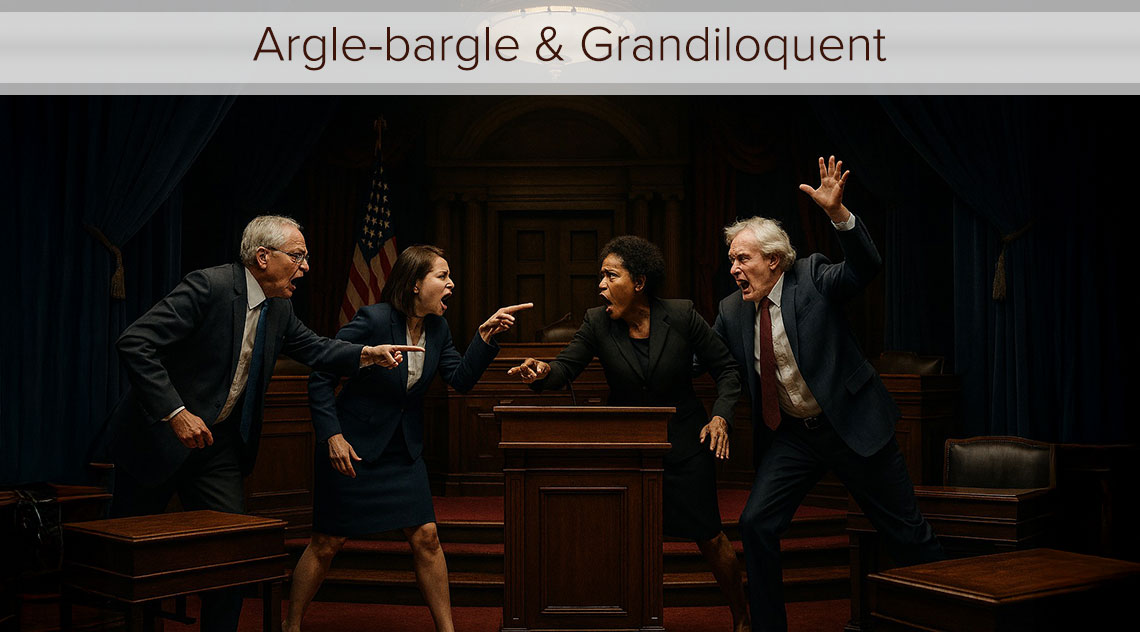
Argle-bargle has a meaning often associated with politics or politicians. It means to quarrel or argue with others, especially members of your party. When Democrats or Republicans fight among themselves, they argle-bargle. But the word (or term) argle-bargle originated in England and is one of those quirky words that seem British.
The word may have originated in Scotland as a modification of the word argue or perhaps mistaken for haggle. But all these possibilities seem to fit. There is another British term, argy-bargy, which means to argue loudly or to have a heated debate.
“The caucus devolved into pointless argle-bargle before anyone made a real decision on the new gerrymandered map.”
“I tuned out their political argle-bargle and focused on my sandwich and beer.”
“Enough with the argle-bargle nonsense, just tell me what you want!”

The word grandiloquent is right in there with argle-bargle if you listen to modern-day politicians. Social media and media feed right into the world of the grandiloquent. An adjective, grandiloquent, has roots in Latin.
Grandiloquent means pompous, bombastic, or just overly colorful in speech. Here in the country, we might say it is ‘highfalutin” speech.
“Mohammed Ali was famous for his grandiloquent speeches leading into each fight, it was part of his persona.”
“Her grandiloquent speech dazzled the uninformed but turned off most of the crowd.”
“He rejected much of the grandiloquent praise in favor of quiet recognition for his accomplishments.”
These two words seem related in the modern political world, and possible to combine them in a sentence without a lot of effort. So here are a few.
“The political debate devolved into grandiloquent argle-bargle, drowning reason in pompous noise.”
“Her grandiloquent argle-bargle impressed no one but herself and her subservient associates.
“His plan was so simple and flawed that he had to hide it behind a curtain of grandiloquent argle-bargle.”

