
As a proud United States Marine Corps veteran, I admit I was embarrassed to learn that I was unaware of five special military days in August. Not all are federal holidays, but they are widely recognized in military and veteran communities as opportunities “to honor,” as stated on an official United States government website, “service, sacrifice, and the history of the U.S. military.”
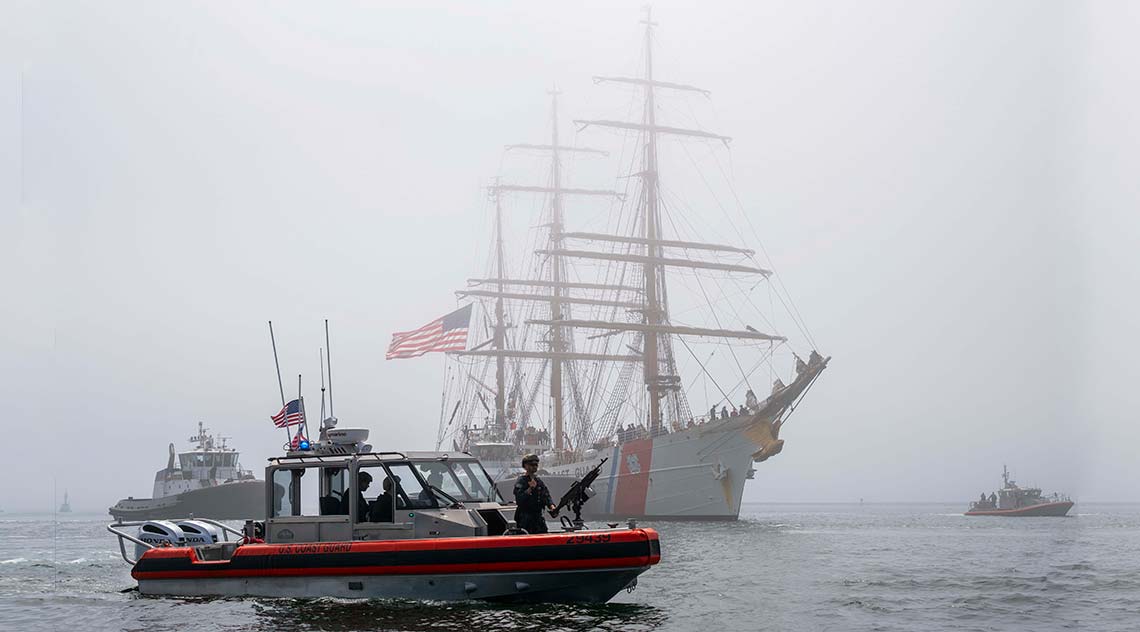
The first of those is August 4, when the federal government honors the United States Coast Guard, one of our country’s six armed services. The Coast Guard traces its origins to August 4, 1790, when the first Congress authorized the construction of ten vessels to enforce tariff and trade laws and prevent smuggling.
Known variously as the Revenue Marine and the Revenue Cutter Service during the nineteenth and early twentieth centuries, this unique agency expanded in size and responsibilities as our nation grew. It was officially renamed in 1915. August 4 annually honors those whose mission is to save lives at sea and to enforce maritime laws.
For the record, the other four special dates in August honoring U.S. military branches, veterans, and service members are as follows: August 7, Purple Heart Day; August 10, Department of Defense Day; and August 29, Marine Corps Reserve Birthday.
The Coast Guard’s official history began on August 4, 1790, when President Washington signed the Tariff Act. This authorized the construction of ten ships to inhibit smuggling and enforce tariff and trade laws.
The service received the name we use today in 1915, when Congress merged the Revenue Cutter Service with the U.S. Life-Saving Service. The Life-Saving Service operated life stations along our nation’s coastlines. These stations were staffed by dedicated service members willing to risk their lives to save those in danger at sea. This role complemented the Revenue Cutter Service’s core missions.
In 1939, President Franklin Roosevelt authorized the transfer of the U.S. Lighthouse Service to the U.S. Coast Guard. In 1946, Congress further expanded the Coast Guard’s responsibilities by transferring the Commerce Department’s Bureau of Marine Inspection and Navigation to the Coast Guard. This placed merchant marine licensing and merchant vessel safety under Coast Guard oversight. These changes gave the nation a single federal maritime agency dedicated to saving life at sea and enforcing the nation’s maritime laws.
Until the Navy Department was established in 1798, the Coast Guard was the nation’s only armed force afloat. It has protected the nation throughout its long history and has proudly served in most of our nation’s conflicts. Its national defense responsibilities remain among its most important functions today.
Furthermore, as a unique agency of the federal government, in times of peace it operates as part of the Department of Homeland Security, serving as the nation’s front-line agency for enforcing the nation’s laws, protecting the marine environment and the nation’s vast coastline and ports, and saving lives. In times of war, or at the direction of the President, the Coast Guard serves as part of the Navy Department.
“Always ready,” the United States Coast Guard’s official motto in Latin reads, “Semper Paratus.”
Since 1917, when the first Coast Guard aviators graduated from Pensacola Naval Aviation Training School, Aviation has become one of the largest components of the Coast Guard’s security, enforcement, and defense readiness. History demonstrates that the United States Coast Guard is always ready to protect our shores and waterways and provides more than search and rescue. It plays a major role in the nation’s navigation system and in Marine Environment Protection.
When Hurricane Katrina struck the Gulf Coast of America in 2005, the value of the Coast Guard’s rescue efforts in that region was never more evident or appreciated, as its members saved more than 33,500 lives, according to national statistics. In other maritime efforts, an estimated 24,000 lives have been rescued from peril in dangerous conditions, thanks to the courage and fortitude of U.S. Coast Guardsmen.
Today, the U.S. Coast Guard has more than 78,000 service members, 135 rotary aircraft, 47 fixed-wing aircraft, 350 aerial drones, 223 cutters, and another 1800 smaller boats. The Coast Guard also maintains over 50,000 “aids to navigation” as it guards more than 95,000 miles of coastline. It has become a vital part of protecting our nation in peacetime and during war. The Coast Guard is part of the Department of Homeland Security in peacetime but becomes part of the Department of the Navy during war.
The Coast Guard may not be as heralded or as legionized as some of the other members of the United States Military Family. Still, on August 4, I hope that one and all who appreciate those who have served their country take a moment to give a well-deserved shout-out to those who have served or are now serving in the United States Coast Guard on what they call “C.G. Day.”
I know this; I am thankful to have been apprised of their service over the years, so I could offer my best Marine Corps salute to those who have served this nation, in one way or another, whether as Coast Guardsmen, civilian employees, retirees, auxiliarists, or dependents.
Thank you, and may God bless you and yours for your role in the defense of our country.